
Why Are Teenagers Turning to AI Chatbots for Mental Health Advice?
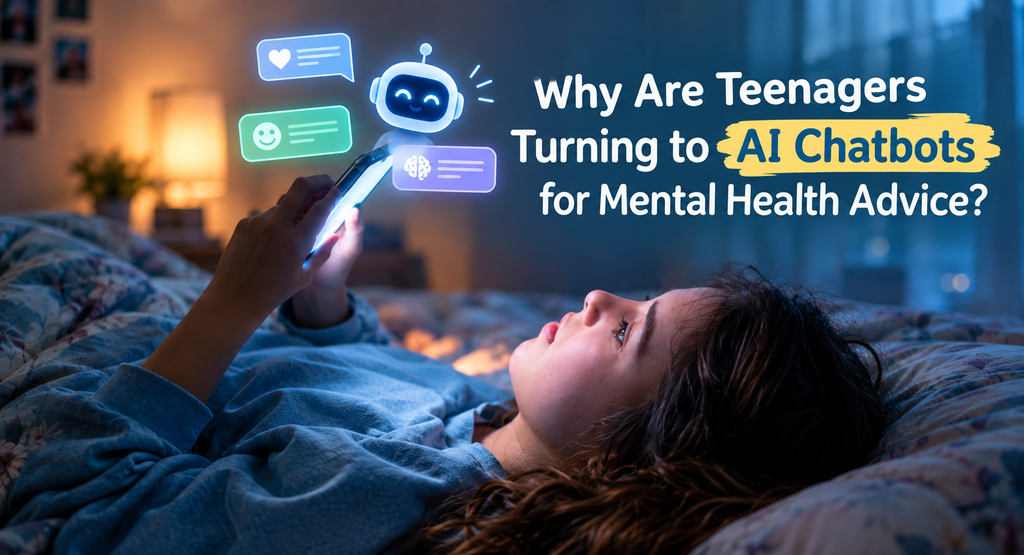
Imagine a teenager lying awake at night, feeling overwhelmed by exam pressure, friendship problems, future worries, or emotions they simply cannot explain. Instead of talking to a parent, teacher, or mental health professional, they may quietly turn to an AI chatbot for answers and reassurance. As technology becomes a regular part of everyday life, many young people are using AI to explore their thoughts and feelings. While AI can provide general information, it cannot replace a proper mental health assessment or understand a teenager’s situation as deeply as a mental health professional can. If emotional concerns continue or start affecting sleep, studies, relationships, behaviour, or daily life, consulting the Best Psychiatrist In Indore can help teenagers and their families understand the underlying concerns and choose appropriate support. Why Do Teenagers Prefer AI Chatbots? There is no single reason. Every teenager is different, but several factors can make AI chatbots attractive. 1. They Get an Immediate Response Teenagers are used to getting information instantly. When they have a question, they often expect an answer within seconds. An AI chatbot can respond immediately, while getting an appointment with a mental health professional may take more time. For a teenager who is awake at night and struggling with thoughts, this instant response can feel comforting. 2. Talking to AI May Feel Less Embarrassing Talking about mental health can be difficult, particularly for teenagers who are worried about being judged. They may hesitate to tell their parents: Typing these thoughts into a chatbot may feel easier than saying them aloud. 3. Fear of Being Judged Teenagers can be extremely sensitive to how others perceive them. They may worry that friends will make fun of them or that parents will become angry or overly concerned. An AI chatbot can seem emotionally neutral, which may encourage teenagers to ask questions they are uncomfortable discussing with people. 4. Curiosity About Their Own Feelings Sometimes teenagers are not necessarily looking for treatment. They simply want to understand themselves. They may search questions such as: “Why do I overthink?” “Why am I always angry?” “Why can’t I concentrate?” “Why do I feel lonely even around people?” An AI chatbot can provide general information that helps them put their feelings into words. Is Using AI for Mental Health Always a Bad Thing? Not necessarily. AI can be useful for general mental health education. It may help teenagers learn about topics such as stress, sleep, emotions, study pressure, communication, and healthy coping habits. The concern begins when a teenager starts depending on AI as their main source of mental health support, particularly when they are experiencing persistent or serious symptoms. AI does not have the same role as a psychiatrist or psychologist. It cannot conduct a complete clinical assessment, observe changes in behaviour over time, or understand the teenager’s complete personal and family context. This is why parents should focus on safe and responsible use, rather than simply banning technology. What Are the Risks of Depending Too Much on AI? One of the biggest concerns is that teenagers may assume that an AI response is the same as a professional mental health assessment. A chatbot may provide general information, but a person’s symptoms can have many possible causes. Stress, sleep problems, physical health conditions, family difficulties, academic pressure, anxiety, depression, and other concerns can sometimes overlap. Another concern is that teenagers may keep asking AI the same questions instead of speaking to someone who can actually help them. For example, a teenager experiencing significant anxiety may repeatedly ask an AI chatbot, “Do I have anxiety?” Instead of seeking professional assessment, they may continue searching for reassurance. This can delay appropriate support. What Should Parents Do? Parents do not necessarily need to panic if they discover that their teenager is using AI to discuss emotions. Instead, it can become an opportunity to start a conversation. Try asking: “What were you looking for?” rather than: “Why are you talking to an AI about your problems?” A calm conversation can help parents understand what the teenager is experiencing. Parents can also encourage teenagers to: When Should a Teenager See a Mental Health Professional? Occasional stress, sadness, anger, or worry is part of growing up. However, parents should pay attention when noticeable changes continue or begin affecting everyday functioning. Professional support may be appropriate when a teenager has persistent: In such situations, consulting the Best Psychiatrist In Indore can help families understand what may be happening and whether professional treatment is needed. AI Can Start a Conversation, But It Shouldn’t End There Perhaps the most important thing parents can remember is that teenagers often use technology because it feels accessible. Instead of seeing AI as the enemy, parents can use this trend as a reason to ask their children what they are going through. A teenager who searches for mental health advice may simply be curious. But sometimes, that search can also be a quiet sign that they are struggling and don’t know how to ask for help. The Best Psychiatrist In Indore can provide a proper evaluation and help teenagers and families understand their concerns in a safe and confidential setting. The goal is not to replace technology with fear. The goal is to make sure technology does not replace genuine human connection and appropriate professional care. A Balanced Approach to Teen Mental Health AI is likely to become an increasingly common part of teenagers’ lives. Mental health conversations will be part of that change too. The answer is not necessarily to prevent teenagers from asking questions online. Instead, they should learn the difference between general information and professional mental health care. Parents can create an environment where teenagers feel comfortable saying, “I’m not okay,” without immediately fearing criticism or punishment. And when emotional or behavioural changes become persistent, seeking help from the Best Psychiatrist In Indore can be an important step toward understanding the situation and supporting the teenager. Mental health support works best when teenagers do not feel alone in dealing
10 Early Signs You May Need Mental Health Treatment in Indore

Mental health is just as important as physical health, but many people ignore early warning signs. A person may continue with daily work, studies, and family responsibilities while silently struggling with emotional difficulties. Everyone experiences stress, sadness, or worry from time to time. However, when these feelings continue for weeks or begin affecting everyday life, they should not be ignored. Recognising the early signs of mental health concerns can help people seek support before problems become more serious. If these symptoms are affecting your life, consulting the Best Psychiatrist In Indore can help you understand what is happening and what kind of support may be useful. 1. Constant Stress and Worry Feeling stressed before an exam, presentation, or important event is normal. But if worry becomes constant and your mind feels busy most of the day, it may affect sleep, concentration, and daily functioning. Some people find themselves thinking about the same problems repeatedly, even when there is no immediate solution. This ongoing stress can become emotionally exhausting. The Best Psychiatrist In Indore can help identify whether these worries are part of anxiety, stress, or another mental health concern. 2. Changes in Sleep Pattern Sleep problems are one of the earliest signs that something may not be right. Some people struggle to fall asleep, wake up several times during the night, or wake too early. Others may sleep much more than usual but still feel tired. Poor sleep can affect mood, energy, memory, and concentration. If sleep difficulties continue for several weeks, it is important to understand the reason behind them. 3. Feeling Sad or Empty for a Long Time Everyone feels low occasionally, especially after difficult experiences. However, if sadness continues for weeks or you feel emotionally empty without a clear reason, it should not be ignored. Some people lose interest in activities they once enjoyed. Others may feel disconnected from family and friends. Speaking with the Best Psychiatrist In Indore can help determine whether these feelings are temporary or part of a larger mental health issue. 4. Overthinking and Difficulty Concentrating Do you find it hard to switch off your thoughts? Overthinking can make simple decisions feel difficult. Some people read the same page repeatedly because they cannot focus. Others feel mentally tired because their mind is always active. When concentration problems begin affecting studies, work, or everyday responsibilities, professional guidance may be helpful. 5. Irritability and Anger Over Small Things Mental health concerns do not always appear as sadness. Some people become more irritable, frustrated, or angry than usual. Small issues may trigger strong emotional reactions. Family members may notice personality changes before the person notices them. Persistent irritability can sometimes be linked to stress, anxiety, sleep problems, depression, or emotional exhaustion. 6. Loss of Interest in Everyday Activities One early warning sign is losing interest in things you normally enjoy. You may stop meeting friends, avoid hobbies, lose motivation, or feel that everyday tasks require too much effort. This does not always mean depression, but when it continues, it is worth understanding why. 7. Physical Symptoms Without a Clear Cause Mental health and physical health are closely connected. Stress and anxiety can sometimes appear as: If medical tests are normal but symptoms continue, emotional health may also need attention. 8. Withdrawing From People Some people slowly distance themselves from friends, family, or social activities. They may prefer staying alone, avoid conversations, or feel too tired to interact with others. Occasional alone time is normal, but long-term withdrawal can be a sign that emotional support is needed. 9. Changes in Appetite Eating habits can change when mental health is affected. Some people lose interest in food, while others eat more than usual, especially during periods of stress or emotional difficulty. Sudden changes in appetite or weight should not be ignored, particularly when they occur along with other emotional symptoms. 10. Feeling Unable to Manage Daily Life One of the clearest signs is when emotional difficulties begin affecting normal responsibilities. You may struggle with work, studies, relationships, parenting, or everyday tasks that once felt manageable. At this stage, consulting the Best Psychiatrist In Indore can help you understand the problem and discuss suitable treatment options. Why Early Treatment Matters Many people wait too long before asking for help. They often think: Sometimes these concerns improve naturally, but sometimes they continue and become more difficult over time. Seeking help early does not mean something is seriously wrong. It means you are taking care of your mental health in the same way you would care for your physical health. The Best Psychiatrist In Indore can help identify concerns early and guide you toward appropriate support. What Kind of Treatment May Help? Mental health treatment is different for every person. Depending on the situation, support may include: Treatment depends on your symptoms, lifestyle, and personal needs. Mental Health Is a Part of Overall Health Many people ignore emotional difficulties because they cannot be seen like a physical illness. But mental health affects how we think, feel, sleep, work, study, and connect with others. If you notice several of these early signs for weeks or months, speaking with the Best Psychiatrist In Indore can help you understand your symptoms and find the right support. Taking help early is not a sign of weakness. It is a step toward better health and a better quality of life. Frequently Asked Questions 1. When should I see the Best Psychiatrist In Indore? If emotional difficulties continue for several weeks, affect sleep, mood, work, studies, or relationships, professional support may be helpful. 2. Are stress and anxiety normal? Short-term stress and worry are normal. However, if they become constant and start affecting daily life, it is important to seek guidance. 3. Can mental health problems cause physical symptoms? Yes. Stress, anxiety, and emotional difficulties can sometimes lead to headaches, fatigue, stomach discomfort, muscle tension, and sleep problems. 4. Can mental health treatment help without medication? Yes. Depending on the situation, treatment may include counselling, lifestyle
Sleep Disorder Treatment in Indore: A Complete Overview
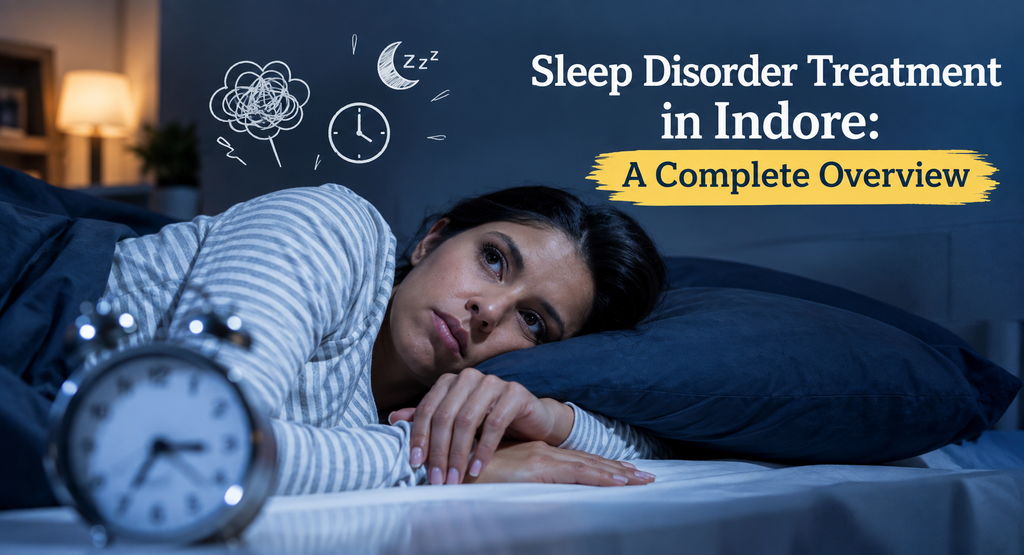
Good sleep is not just about feeling fresh in the morning. Sleep gives your body and mind time to rest, recover, and prepare for the next day. When sleep is disturbed regularly, it can affect your mood, concentration, energy, work, studies, and relationships. Many people have an occasional sleepless night. That is usually not a major concern. But when difficulty sleeping becomes a regular problem, it may be a sign of a sleep disorder or another health concern. If you are struggling with sleep for weeks or months, speaking with the Best Psychiatrist In Indore can help you understand what may be causing the problem and what kind of treatment may be suitable for you. What Is a Sleep Disorder? A sleep disorder is a condition that affects your normal sleep pattern. It may make it difficult to fall asleep, stay asleep, wake up at the right time, or feel rested after sleeping. Some people spend hours in bed but cannot fall asleep. Others fall asleep easily but wake up several times during the night. Some may wake up very early and find it difficult to sleep again. Sleep problems can also happen in the opposite way. A person may feel excessively sleepy during the day or suddenly fall asleep at inappropriate times. These problems should not always be treated as a simple lack of discipline. Sleep can be affected by stress, anxiety, depression, medicines, physical health conditions, work schedules, lifestyle habits, and other sleep disorders. Common Types of Sleep Problems Sleep disorders can look different from person to person. Some common problems include insomnia, sleep apnoea, restless legs syndrome, narcolepsy, and problems related to the body’s sleep-wake schedule. Insomnia is one of the most common concerns. A person may have difficulty falling asleep, wake repeatedly during the night, or wake too early and be unable to go back to sleep. Long-term insomnia can also lead to daytime tiredness, irritability, and difficulty concentrating. Sleep apnoea is another condition that should not be ignored. It can involve loud snoring, pauses in breathing, choking or gasping during sleep, and excessive tiredness during the day. The important thing is to understand why the sleep problem is happening instead of simply trying to force yourself to sleep. What Causes Sleep Disorders? There is rarely one reason behind every sleep problem. Sometimes the reason is obvious. You may be under pressure at work, preparing for exams, dealing with relationship problems, or going through a difficult period in life. Stress and anxiety can make the mind stay active even when the body is tired. Other times, the cause may be less obvious. Common factors that can affect sleep include: This is why taking sleeping medicine on your own may not solve the actual problem. The underlying cause needs to be understood first. How Does Poor Sleep Affect Mental Health? Sleep and mental health are closely connected. When you do not sleep well, you may notice that you become more irritated, emotionally sensitive, forgetful, or unable to concentrate. Even simple daily tasks can start feeling harder. For someone already dealing with anxiety or low mood, poor sleep can make things feel even more difficult. At the same time, ongoing anxiety, depression, or stress can make it harder to sleep. This can become a frustrating cycle: you cannot sleep because your mind is active, and the lack of sleep then makes your mind feel even more tired and overwhelmed. A Best Psychiatrist In Indore can assess whether your sleep problem may be connected with anxiety, depression, stress, medication, or another mental health concern. When Should You Seek Sleep Disorder Treatment? You do not need to wait until your sleep problem becomes severe. If you occasionally sleep late because of a busy day, travel, celebrations, or temporary stress, it may settle once your routine returns to normal. But professional advice may be helpful when sleep problems keep happening and begin affecting your everyday life. You should consider speaking with a professional if you regularly have difficulty falling asleep, keep waking during the night, wake too early, feel exhausted during the day, or struggle to concentrate because of poor sleep. It is also important to seek medical advice if you snore loudly, wake up gasping or choking, or someone notices that your breathing stops during sleep. The Best Psychiatrist In Indore can help assess the mental-health side of sleep problems and guide you toward appropriate care when needed. What Happens During Sleep Disorder Treatment? Treatment depends on the reason behind the sleep problem. The first step is usually understanding your sleep pattern and looking at factors that may be affecting it. Your doctor may ask about your bedtime, waking time, daytime tiredness, stress, mood, medicines, lifestyle, and other symptoms. For some people, improving sleep habits may be enough. For others, counselling or structured therapy may be recommended. Cognitive behavioural therapy for insomnia, commonly called CBT-I, is an evidence-based approach used to address thoughts and behaviours that keep insomnia going. Medication may sometimes be considered, depending on the person’s condition. It should be taken only under appropriate medical guidance because some sleeping medicines can cause side effects or dependence. Simple Habits That Can Improve Sleep Small changes in your daily routine can make a real difference. Try to keep your sleep and wake-up times reasonably consistent, even on weekends. Give yourself some quiet time before bed instead of going directly from work, studying, or scrolling on your phone to trying to sleep. Keep your bedroom comfortable, quiet, and dark. Avoid caffeine late in the day and try not to use your phone immediately before bedtime. Regular daytime physical activity can also support better sleep. Most importantly, do not become overly worried about one bad night. Worrying continuously about whether you will sleep can itself make relaxation harder. Why Professional Help Can Make a Difference Many people with sleep problems keep trying different home remedies without understanding what is actually causing their symptoms. One person may have insomnia because of anxiety.
How the Best Psychiatrist In Indore Can Help With Anxiety and Stress

Feeling stressed once in a while is a normal part of life. Work pressure, family responsibilities, relationship problems, financial concerns, or major life changes can make anyone feel overwhelmed. But when stress or anxiety starts affecting your sleep, concentration, relationships, work, or everyday happiness, it may be time to seek professional help. Consulting the Best Psychiatrist In Indore can help you understand why you are feeling this way and find the right approach to manage it. Anxiety isn’t always just about feeling nervous. Sometimes, it shows up as constant worrying, irritability, racing thoughts, poor sleep, tiredness, difficulty concentrating, or even physical symptoms such as a fast heartbeat or muscle tension. The good news is that anxiety and stress can be managed. You don’t have to keep struggling with them on your own. What Is the Difference Between Stress and Anxiety? Stress usually happens in response to a particular situation. For example, you may feel stressed before an important meeting, examination, interview, or difficult family situation. Anxiety can sometimes continue even when there is no immediate danger or clear reason for feeling worried. You may find yourself thinking: “What if something goes wrong?” “What if I can’t handle this?” “Why can’t I stop thinking?” When these worries become frequent and start interfering with everyday life, professional assessment can be helpful. Common Signs of Anxiety and Stress Anxiety doesn’t look the same for everyone. Some people become restless, while others withdraw or become unusually quiet. Some common signs include: Having one or two of these symptoms occasionally doesn’t necessarily mean you have an anxiety disorder. What matters is how often they occur and how much they affect your daily life. How Can a Psychiatrist Help With Anxiety and Stress? A psychiatrist doesn’t simply look at one symptom. They try to understand the bigger picture. 1. Understanding What’s Really Going On Stress, anxiety, depression, sleep problems and other mental-health concerns can sometimes overlap. A psychiatrist will discuss your symptoms, daily routine, personal circumstances and mental-health history to understand what may be contributing to your difficulties. This can help distinguish normal temporary stress from a condition that may require treatment. 2. Creating a Personalized Treatment Plan There isn’t one treatment that works for everyone. Depending on your symptoms and needs, treatment may include psychotherapy, lifestyle changes, stress-management strategies, medication, or a combination of approaches. The aim is not simply to make you feel better for a few days. The goal is to help you manage your symptoms and improve your overall quality of life. 3. Helping You Understand Your Triggers Sometimes anxiety has obvious triggers. At other times, you may not understand why you feel anxious. Professional guidance can help you identify patterns in your thoughts, emotions and behaviour. For example, you may discover that your anxiety becomes worse when you are: Understanding the trigger is often an important step toward managing it. 4. Managing Overthinking Anxiety and overthinking often go together. You may replay conversations in your head, worry about future situations, or keep thinking about things that have already happened. The more you try to force these thoughts away, the more noticeable they can become. A mental-health professional can help you learn healthier ways of responding to repetitive and anxious thoughts. 5. Addressing Sleep Problems Stress and anxiety can make it difficult to fall asleep or stay asleep. And poor sleep can make anxiety worse the next day. This can create a cycle: Stress → Poor sleep → Tiredness → More anxiety → More stress If sleep problems continue for weeks or start affecting your daily functioning, they shouldn’t be ignored. A psychiatrist can assess whether anxiety, stress, depression, lifestyle factors, or another issue may be contributing to your sleep difficulties. When Should You See a Psychiatrist? You don’t need to wait until anxiety becomes unbearable before asking for help. Consider consulting a psychiatrist if: Seeking help doesn’t mean that you are weak. It means you are taking your mental health seriously. Can You Manage Anxiety Without Medication? Not everyone with anxiety needs medication. Treatment depends on the individual’s symptoms, severity and overall situation. For some people, psychotherapy and lifestyle changes may be enough. For others, medication may be recommended as part of treatment. This is why self-medication or taking someone else’s anxiety medicine is not advisable. A qualified psychiatrist can assess your situation and recommend an appropriate treatment plan. Simple Habits That Can Support Your Mental Health Professional treatment can be very helpful, but your daily habits also matter. Try to maintain a regular sleep schedule, stay physically active, eat regular balanced meals, take breaks from screens, spend time with supportive people, and make space for activities you genuinely enjoy. You don’t need to change everything overnight. Small, consistent changes are often easier to maintain. Choosing the Best Psychiatrist In Indore Finding the right psychiatrist is a personal decision. When looking for the Best Psychiatrist In Indore, consider factors such as qualifications, experience, area of expertise, communication style and whether you feel comfortable discussing your concerns with them. A good consultation should feel like a space where you can talk openly without feeling judged. Mental health treatment is not just about identifying a diagnosis. It is also about understanding the person behind the symptoms. Final Thoughts Stress is a part of life, but living with constant anxiety doesn’t have to become your normal. If you are always worrying, struggling to sleep, feeling overwhelmed, losing concentration, or finding it difficult to enjoy your usual activities, don’t ignore these changes. The Best Psychiatrist In Indore can help you understand what may be contributing to your anxiety and stress and guide you towards suitable treatment. You don’t have to figure everything out by yourself. Sometimes, asking for help is the first step toward feeling like yourself again. Frequently Asked Questions 1. When should I see a psychiatrist for stress? If stress continues for several weeks, feels difficult to manage, or starts affecting your sleep, work, relationships, concentration or daily activities, consider speaking with
Why Is Your Mind Always Busy? Understanding Mental Overload in Modern Life
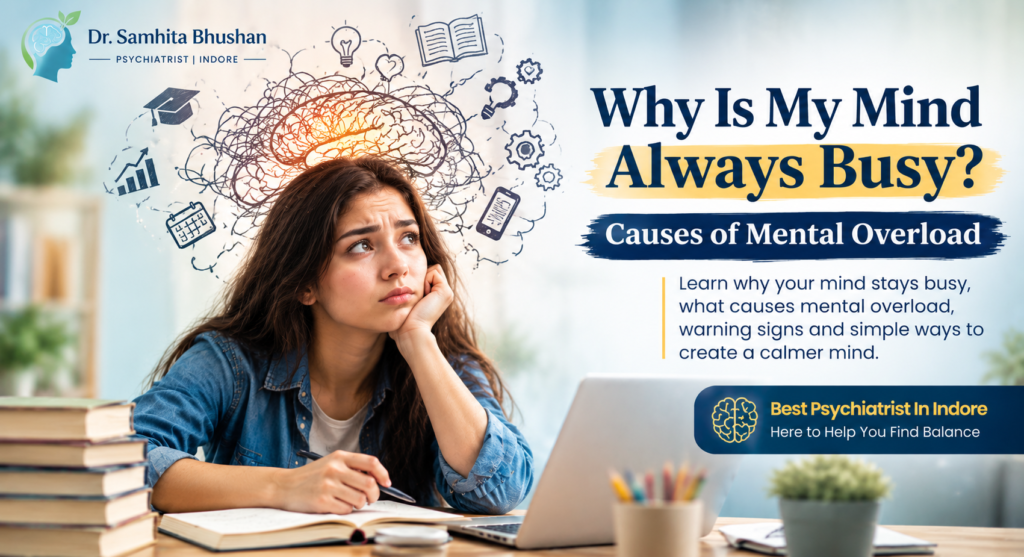
When Your Body Is Resting, But Your Mind Refuses to Slow Down Have you ever finished a long day, sat down to relax, and realised that your mind simply would not slow down? You may be physically tired, but your thoughts continue moving from one subject to another. You think about unfinished work, tomorrow’s responsibilities, a conversation you had earlier, a message you haven’t answered, or something that might happen in the future. Even when everything around you is quiet, your mind may feel unusually busy. This experience is becoming increasingly common in modern life. Work pressure, family responsibilities, social expectations, constant notifications and the endless flow of information through digital devices can make it difficult to experience genuine mental rest. Recent research has also explored how digital interactions, information overload and technology-related stress can contribute to fragmented attention and emotional exhaustion. A busy mind does not automatically mean that something is wrong with you. Sometimes, it simply means that your mind has been carrying too much for too long. The Hidden Mental Load We Carry Every Day Mental overload does not always come from one major problem. In many cases, it develops gradually through dozens of small responsibilities and decisions. Managing work, family, finances, relationships, personal goals and everyday responsibilities requires continuous mental effort. Even simple decisions can consume mental energy. What should I do first?Should I reply to this message now?Did I finish that task?What will happen next week?Should I accept this opportunity?Why did that person react that way? When these thoughts continue throughout the day without enough time for genuine rest, the mind can begin to feel overwhelmed. You may not be physically doing too much, but mentally, you may be carrying far more than you realise. Why Can’t I Just Switch Off? One of the most frustrating experiences of mental overload is wanting to relax but being unable to do so. You may sit down after work with the intention of resting, but your mind immediately begins reviewing everything that happened during the day. Modern technology can make this experience more difficult. Messages, emails, social media updates, news alerts and other notifications can create a constant expectation that we should remain available. Recent research has examined the relationship between digital stress, constant connectivity and difficulty mentally disconnecting from technology. Technology itself is not necessarily the problem. Smartphones, computers and online platforms can make communication, education and work much easier. The challenge begins when there is no clear boundary between being connected and being able to switch off. When your attention is repeatedly interrupted throughout the day, genuine mental rest can become harder to achieve. Your Phone May Be Taking More Mental Space Than You Realise Think about how often you check your phone during an ordinary day. You may look at a message, then an email, then a social media post, followed by a news update or another notification. Each individual action may seem insignificant, but constantly shifting your attention can leave you feeling mentally drained. Information overload can also contribute to social-media fatigue and emotional exhaustion. Research continues to examine how excessive or continuous digital engagement can influence attention, stress and overall well-being. This is why you may spend an entire evening scrolling through your phone and still feel tired afterwards. Scrolling may occupy your time, but it does not necessarily provide the kind of mental rest your brain needs. What Does Mental Overload Feel Like? Mental overload can look different from person to person. Some people experience excessive overthinking, while others notice irritability, difficulty concentrating or a general feeling of being mentally exhausted. You may find yourself replaying simple conversations repeatedly or worrying about situations that have not happened yet. Small decisions may suddenly feel surprisingly difficult. You may also become more impatient when dealing with minor problems because your emotional energy is already low. Another common experience is difficulty concentrating. You may begin reading something but lose focus after a few minutes, start one task and then move to another, or repeatedly check your phone without a specific reason. Some people also notice that they no longer enjoy quiet moments. When the brain becomes accustomed to constant stimulation, silence can initially feel uncomfortable. Occasional mental fatigue is normal. However, when these experiences become persistent and start affecting your sleep, relationships, work or everyday functioning, they deserve more attention. When an Overactive Mind Affects Your Sleep Mental overload and sleep can influence each other. You may feel physically exhausted at night, but once you get into bed, your thoughts become more active. You remember something you forgot to do. You start thinking about tomorrow. You replay a conversation. You worry about an upcoming responsibility. You check your phone and see something else that captures your attention. Before you realise it, another hour has passed. This can create a frustrating cycle. Mental overload can make it harder to relax and sleep, while inadequate or poor-quality sleep can make concentration, emotional regulation and stress management more difficult the following day. This is one reason why improving mental well-being often requires looking at the entire pattern rather than focusing on one symptom. How Can You Give Your Mind More Breathing Space? You do not need to completely change your lifestyle to begin reducing mental overload. Small, consistent changes can make everyday life feel more manageable. One useful approach is to create a simple mental-unloading routine. Before going to bed, write down unfinished tasks, tomorrow’s priorities and anything you are worried about remembering. Putting these thoughts on paper can reduce the need to mentally repeat them. It can also help to create technology-free periods during the day. You do not need to delete social media or stop using your phone completely. Instead, consider putting your phone away during meals, conversations, short walks or the last part of your evening. Another helpful habit is to reduce unnecessary multitasking. When possible, give your full attention to one activity at a time. If you are eating, focus on eating. If
Career Stress in Students: How Academic Pressure Affects Mental Health

Choosing a career can feel exciting, but for many students, it can also become a major source of stress. Academic competition, examinations, expectations from parents, uncertainty about the future, and pressure to achieve high marks can make students feel overwhelmed. A certain amount of academic stress can motivate students to prepare and perform better. However, when pressure becomes constant and begins affecting sleep, mood, concentration, relationships, or daily functioning, it should not be ignored. In such situations, guidance from the Best Psychiatrist In Indore can help students and families understand the concerns and identify appropriate support. Why Do Students Experience Career Stress? Students today often face pressure from multiple directions. They may feel they must score high marks, choose the “right” career, compete with their peers, secure admission to a preferred college, or meet family expectations. Social media can also contribute to comparison. Seeing others share their achievements may make students feel that they are falling behind. For some students, uncertainty itself becomes stressful. They may repeatedly think, “What if I choose the wrong career?” or “What if I don’t succeed?” Persistent worry can make career decisions feel much more difficult. The Best Psychiatrist In Indore can help when these worries become excessive, persistent, or disruptive. How Academic Pressure Can Affect Mental Health 1. Anxiety and Excessive Worry Academic pressure can lead to constant worrying about examinations, marks, college admissions, or future career opportunities. Students may find it difficult to relax because their minds remain focused on the next challenge. 2. Sleep Problems Late-night studying, examination anxiety, and worrying about academic performance can interfere with healthy sleep. Insufficient sleep may then affect concentration, energy, mood, and academic performance. 3. Loss of Motivation A student under constant pressure may gradually lose interest in studying or activities they previously enjoyed. They may feel emotionally exhausted rather than simply “lazy.” 4. Difficulty Concentrating Stress can make it harder to focus on lessons, remember information, or complete assignments. A student may sit with books for hours but struggle to absorb what they are reading. 5. Irritability and Emotional Changes Academic pressure can sometimes result in frustration, irritability, frequent crying, emotional withdrawal, or sudden changes in behaviour. Parents should pay attention to significant changes rather than dismissing them as normal teenage behaviour. If these symptoms persist, consultation with the Best Psychiatrist In Indore can help determine whether the student is experiencing significant anxiety, depression, burnout, or another mental health concern. Warning Signs Parents Should Not Ignore Parents and teachers can play an important role in recognising emotional difficulties. Warning signs may include: When several warning signs appear together or interfere with everyday functioning, seeking professional guidance from the Best Psychiatrist In Indore can be an important step. How Can Students Manage Career Stress? Set Realistic Goals Students do not need to solve their entire future at once. Breaking large academic goals into smaller, achievable tasks can make pressure feel more manageable. Take Regular Breaks Long hours of continuous studying are not always productive. Short breaks, physical activity, hobbies, and adequate rest can support concentration and wellbeing. Avoid Constant Comparison Every student has different abilities, interests, circumstances, and learning styles. Comparing yourself continuously with classmates or people online can increase unnecessary pressure. Encourage Open Communication Students should feel comfortable discussing their fears and career concerns with parents, teachers, counsellors, or mental health professionals without fear of judgement. Seek Professional Support If academic or career stress becomes overwhelming, professional help can provide valuable guidance. The Best Psychiatrist In Indore can evaluate the student’s emotional and psychological wellbeing and suggest appropriate support based on individual needs. Conclusion Career decisions and academic challenges are important parts of a student’s life, but constant pressure should not come at the cost of mental health. Students need encouragement, realistic expectations, adequate rest, healthy routines, and a safe environment where they can discuss their concerns. Parents and educators should remember that academic performance is only one part of a student’s overall wellbeing. If career stress or academic pressure begins affecting a student’s emotional health, seeking timely professional support can make a meaningful difference. For students experiencing persistent anxiety, emotional distress, sleep difficulties, or overwhelming academic pressure, consulting the Best Psychiatrist In Indore can help identify the underlying concerns and guide them toward appropriate support. Frequently Asked Questions 1. Is career stress normal for students? Some level of stress about exams and career decisions is normal. However, persistent stress that affects sleep, mood, concentration, relationships, or daily functioning should receive attention. 2. Can academic pressure cause anxiety in students? Yes. Excessive academic pressure may contribute to anxiety and persistent worry, particularly when students feel they cannot meet expectations or fear failure. 3. How can parents reduce academic pressure? Parents can focus on effort and learning rather than only marks, encourage healthy routines, allow adequate rest, listen without judgement, and help children set realistic goals. 4. When should a student see a psychiatrist? If stress, anxiety, low mood, sleep problems, withdrawal, or academic difficulties persist or significantly interfere with daily life, consulting the Best Psychiatrist In Indore may be appropriate. 5. Can career counselling help with student stress? Career counselling can help students understand their interests, strengths, and available options. If significant anxiety or emotional difficulties are present, mental health support may also be beneficial.
Signs of Anxiety You Shouldn’t Ignore

Anxiety is something most people experience at some point in life. Feeling nervous before an exam, worrying about an important meeting, or feeling uneasy before a big change is normal. These feelings usually settle once the situation is over. But anxiety can become a problem when the worry does not go away. You may feel tense even when there is no clear reason. Your mind may keep thinking about things that could go wrong. Sometimes, you may even start avoiding places, people, or situations because they make you uncomfortable. The difficult part is that anxiety does not look the same for everyone. One person may worry all day, while another may mainly notice physical symptoms such as a fast heartbeat or trouble sleeping. If you feel that anxiety is starting to affect your everyday life, speaking with the Best Psychiatrist In Indore can help you understand what you are going through. What Is Anxiety? Anxiety is the body’s natural response to stress or a feeling of danger. It is part of our normal “fight or flight” response. For example, if you are about to give a presentation, you may feel nervous. Your heart may beat faster, your hands may become sweaty, and you may feel butterflies in your stomach. Once the presentation is over, these feelings usually become less intense. The problem is when these feelings happen too often, become very strong, or continue even when there is no immediate danger. Anxiety can affect your thoughts, emotions, body, sleep, work, studies, and relationships. That is why it is worth paying attention to signs that do not seem to be going away. Signs of Anxiety You Shouldn’t Ignore Sometimes anxiety starts slowly. You may not even realise that your stress has become more than usual. Here are some common signs to watch for. 1. Constant Worry One of the most common signs is worrying too much. You may keep thinking about your health, family, money, work, studies, relationships, or the future. Even after solving one problem, your mind quickly finds another thing to worry about. You may also spend a lot of time thinking about “what if” situations. “What if something goes wrong?” “What if I make a mistake?” “What if people judge me?” When these thoughts keep coming back and become difficult to control, they deserve attention. 2. Feeling Restless or On Edge Do you often feel like you cannot fully relax? You may feel restless, impatient, or constantly alert. Even when you are sitting at home, your mind may feel as if something needs to be dealt with. Some people describe it as feeling like they are always waiting for something bad to happen. If this feeling has become part of your everyday life, talking to the Best Psychiatrist In Indore can help you understand whether anxiety may be involved. 3. Trouble Sleeping Anxiety and sleep problems often go together. You may lie in bed feeling tired, but your mind keeps working. You may think about conversations from the day, tomorrow’s responsibilities, or things that might happen in the future. Sometimes you may fall asleep but wake up during the night with a busy mind. Poor sleep can make you tired the next day, and being tired can make anxiety feel even stronger. This can turn into a frustrating cycle. 4. Fast Heartbeat or Breathing Changes Anxiety does not only affect your thoughts. You can feel it physically too. During periods of anxiety, your heart may beat faster. You may feel short of breath, shaky, sweaty, or light-headed. Some people also feel tightness in their chest. These symptoms can be frightening, especially when they happen suddenly. If you experience new, severe, or unusual physical symptoms, do not assume they are only anxiety. It is important to get appropriate medical advice. 5. Difficulty Concentrating When your mind is busy worrying, it becomes harder to focus on other things. You may read the same page several times without remembering what you read. You may start working but keep getting distracted by your thoughts. This can affect students, working professionals, parents, and anyone dealing with long periods of stress. 6. Avoiding People or Situations Anxiety can sometimes make you want to avoid things that make you uncomfortable. You may stop attending social events, avoid speaking in meetings, postpone important work, or stay away from situations where you think people may judge you. Avoiding something can make you feel better for a short time. But if you keep avoiding it, the fear may become stronger over time. 7. Irritability and Emotional Exhaustion Anxiety can be tiring. When your mind is constantly busy, you may become easily irritated or lose patience with people around you. Small things that normally would not bother you may suddenly feel difficult. You may also feel mentally exhausted even after spending the day doing ordinary tasks. 8. Physical Complaints Without a Clear Reason Some people notice physical changes when they are anxious. These may include headaches, stomach discomfort, muscle tension, sweating, trembling, tiredness, or frequent feelings of uneasiness. How Can You Manage Anxiety? You do not have to change everything at once. Small changes can make a difference. Start by noticing what usually makes your anxiety worse. It may be lack of sleep, too much caffeine, work pressure, family stress, social situations, or constantly checking your phone. Try to maintain a regular sleep routine and make some time for movement during the day. Even a simple walk can give you a break from sitting with the same thoughts. Talk to someone you trust instead of keeping every worry to yourself. Writing your thoughts down can also help you see which problems you can actually act on and which ones are outside your control. Most importantly, do not feel embarrassed about asking for professional help. Anxiety is common, and getting support does not mean that you are weak. The Best Psychiatrist In Indore can listen to your concerns and help you understand what may be behind your symptoms. When
Screen Time and Mental Health: When Does It Become a Problem?

Think about your normal day. You wake up and check your phone. You look at messages while having breakfast. You use a laptop for work or studies. In between, you check Instagram, YouTube, WhatsApp, or other apps. Then, before going to sleep, you pick up your phone again. For many of us, this has become completely normal. Screens are now a part of everyday life. We use them for work, education, entertainment, shopping, communication, and even relaxation. So, having screen time is not automatically a bad thing. The problem starts when we stop feeling in control of how much time we spend on our devices. Maybe you planned to watch one short video but ended up scrolling for an hour. Maybe you keep checking your phone even when there is nothing new. Or perhaps you stay awake at night because you cannot put your phone down. If screen use is starting to affect your sleep, mood, relationships, studies, work, or daily routine, it may be time to look at your digital habits more closely. If you are worried about changes in mood, sleep, anxiety, or behaviour related to excessive screen use, speaking with the Best Psychiatrist In Indore can help you understand the situation better. How Can Too Much Screen Time Affect Mental Health? Screen time affects different people in different ways. Using a screen for work for several hours is not the same as spending several hours endlessly scrolling through social media. What you are doing on the screen, when you are doing it, and how it affects the rest of your life all matter. 1. It Can Affect Your Sleep One of the first things people notice is a change in sleep. You may tell yourself that you will check your phone for five minutes before bed. Then one video becomes another, and suddenly it is much later than you expected. Late-night scrolling can keep your mind active when you should be winding down. Poor sleep can leave you tired, irritated, and less focused the next day. And then the cycle can continue. You feel tired during the day, spend more time on your phone because you do not feel like doing anything else, and again stay up late at night. If sleep problems are becoming regular, the Best Psychiatrist In Indore can help you look at your sleep and mental health together. 2. It May Increase Stress Our phones give us information all day long. Messages, emails, social media posts, news, work updates, and notifications can make it difficult to mentally switch off. You may also feel that you have to reply immediately or keep checking what is happening online. This constant connection can become tiring. Even when you are physically resting, your mind may still feel busy. 3. Social Media Can Affect Self-Confidence Social media can be fun and useful, but it can also create unhealthy comparisons. You may see someone travelling, getting a promotion, buying a house, looking perfect, or achieving something important. After seeing these posts every day, you may start wondering why your own life does not look the same. But social media usually shows selected moments, not the complete picture. Constant comparison can sometimes affect self-confidence and make people feel that they are not doing enough. 4. It Can Make Concentration Harder Have you ever started studying or working and checked your phone after just a few minutes? A notification appears. You open it. Then you see another message. Then you check another app. Before you know it, your attention has moved away from the task. Frequent interruptions can make it harder to stay focused. You may spend more time working but get less done. For students, this can become especially frustrating during exams or important assignments. 5. It Can Reduce Real-Life Interaction A phone can connect us with people who are far away. That is a good thing. But sometimes, we become so busy with online conversations that we stop paying attention to the people sitting next to us. Family meals, conversations with friends, outdoor activities, hobbies, and simple moments can slowly get replaced by screen time. A healthy life needs both digital connection and real-world connection. When Does Screen Time Become a Problem? There is no single number of hours that automatically means someone has a screen-time problem. For one person, several hours of screen use may be necessary for work. For another, much less time may start causing problems. The more useful question is: “What is my screen time doing to the rest of my life?” If you are sleeping less, avoiding people, neglecting responsibilities, or feeling unable to control your phone use, it deserves attention. Some signs that your screen habits may be becoming unhealthy include: If these signs are affecting your daily life, the Best Psychiatrist In Indore can help you understand whether there is an underlying concern such as anxiety, stress, low mood, sleep difficulty, or compulsive behaviour. How Can You Reduce Screen Time? You do not have to throw your phone away or stop using technology. The goal is balance. 1. Start With One Small Change Do not suddenly try to cut your screen time by several hours. Start with something simple. For example, keep your phone away during meals. Or decide that you will not use social media for the first 30 minutes after waking up. Small changes are easier to maintain. 2. Keep Your Phone Away at Bedtime If your phone is next to your pillow, it is much easier to pick it up. Try charging it somewhere away from your bed. This simple change can make late-night scrolling less tempting. 3. Turn Off Unnecessary Notifications Not every notification needs your attention. Turn off alerts that are not important. Your phone does not need to interrupt you every few minutes. 4. Find Other Things You Enjoy Think about what you used to enjoy before your phone became such a big part of your day. Maybe it was walking, reading, cooking, gardening, playing
Why Do You Feel Emotionally Drained After Scrolling Social Media?

You Open Social Media to Relax, So Why Do You Feel Worse Afterwards? You have a few minutes to yourself, so you open Instagram, Facebook, YouTube Shorts or another social media platform. You tell yourself that you will scroll for just a few minutes. One video becomes another. Then you see someone’s holiday photographs, a friend’s achievement, a news story, an upsetting post and several advertisements. You continue scrolling without really knowing what you are looking for. Eventually, you put your phone down. But instead of feeling relaxed, you feel strangely tired. Maybe you feel irritated, distracted, low, anxious or emotionally empty. Sometimes you may not even understand why you feel this way. If this sounds familiar, you are not alone. Researchers have described a phenomenon known as social media fatigue, which can involve tiredness, frustration, exhaustion, loss of interest and reduced motivation related to social-media use. A systematic review of 40 studies found that information overload and other individual, relational and environmental factors can contribute to this experience. The important point is that social media itself is not necessarily harmful. It can help people communicate, find support, learn new things and stay connected. The concern is more about how we use it, what we are exposed to and how our minds respond to that experience. Your Brain May Be Processing More Than You Realise Scrolling can look like a passive activity, but your mind is constantly receiving information. One post shows someone’s success. Another discusses relationships. The next contains disturbing news. Then you see a product advertisement, a political opinion, a personal story or a short video designed to hold your attention. Your brain is continuously interpreting images, words, emotions and social signals. This can create information overload. Research has found that information overload, social overload, communication overload and other aspects of social-media use can be associated with exhaustion. A 2025 meta-analysis specifically identified these different forms of social-media overload and found relationships with exhaustion and problematic use. So when you say, “I only scrolled for 20 minutes,” the experience may still have involved a considerable amount of mental stimulation. The Comparison Trap Can Quietly Affect Your Mood One of the most emotionally demanding aspects of social media is comparison. You may see someone getting married while you are single. Someone is travelling while you are working. Someone has received a promotion while you are struggling with your career. Someone appears confident, successful and happy while you are having a difficult week. You know, logically, that social media does not show someone’s entire life. Yet emotions do not always follow logic. Repeated exposure to carefully selected images can create the impression that other people are constantly moving forward while you are somehow falling behind. Research on Instagram and mental health has found that exposure to upward-comparison content can have negative effects on well-being. The problem is not necessarily one particular post. It is the repeated comparison. Over time, you may start asking yourself questions such as, “Why am I not doing enough?” or “Why doesn’t my life look like that?” And those thoughts can leave you emotionally exhausted. Sometimes You Are Not Comparing Yourself — You Are Absorbing Other People’s Emotions Social media can also expose you to the emotions of hundreds of people in a very short period. Someone is angry. Someone is grieving. Someone is celebrating. Someone is frightened. Someone is arguing. Someone is sharing disturbing news. Your mind moves from one emotional environment to another without having enough time to process each one. This can be particularly difficult when your own emotional reserves are already low. Recent research has also examined the relationship between exposure to distressing social-media content and emotional exhaustion, anxiety and other psychological outcomes. This doesn’t mean you need to avoid every difficult story. Being informed and staying connected can be valuable. But constantly consuming emotionally intense content without taking breaks can leave you feeling overwhelmed. Doomscrolling Can Keep You Stuck in a Negative Cycle Have you ever opened social media because you were bored and then found yourself reading one negative story after another? You know the content is making you uncomfortable. You still continue. This behaviour is often described as doomscrolling – repeatedly consuming negative or distressing online content. A 2026 scoping review found that doomscrolling is commonly characterised by compulsive consumption of negative content and is associated in existing research with anxiety, depression, stress and reduced resilience. The researchers also noted that much of the current evidence is cross-sectional, so these associations should not automatically be interpreted as proof of cause and effect. Sometimes we continue scrolling because we are looking for certainty. We want to know what happened. We want another update. We want to understand what comes next. But the next post rarely provides the reassurance we are looking for. Instead, it often creates another question. Why Do You Feel Tired Even When You Were “Just Sitting”? Emotional exhaustion is different from physical tiredness. You may not have walked long distances or done strenuous physical work, yet your mind can still feel depleted. Social-media use can involve constant attention switching, information processing, emotional reactions and social evaluation. Research examining social-media fatigue has found that emotional exhaustion can act as an important pathway between negative social-media experiences and fatigue. Information overload, system overload and concerns such as privacy or cyberbullying have all been studied as possible contributors. This helps explain why you can spend an evening scrolling and still feel like you need a break afterwards. Your body was resting. Your mind wasn’t necessarily resting. Not Everyone Who Uses Social Media Will Experience These Effects It is important not to treat social media as automatically harmful. The relationship between social media and mental health is complicated. A systematic review and meta-analysis published in 2024 found that problematic social-media use had more consistent associations with depression, anxiety and poorer well-being than social-media use in general. Similarly, recent research involving adolescents found that problematic social-media use showed more consistent associations
Why Do I Overthink So Much? Causes and Ways to Manage Overthinking

Why Do I Overthink So Much? Have you ever been tired enough to sleep, but your mind had other plans? You lie down, close your eyes, and suddenly remember something you said earlier that day. Then you start wondering if you should have said it differently. From there, your mind moves to tomorrow, next week, or even something that happened months ago. One thought leads to another. This is what overthinking can feel like. It can happen to anyone. Sometimes we think because we have a real problem to solve. That kind of thinking can be useful. But overthinking is different. You may keep going over the same situation without finding a clear answer. You might ask yourself, “What if I make the wrong choice?” “What if they are upset with me?” or “What if something goes wrong?” After a while, this constant thinking can leave you mentally tired. If overthinking is affecting your sleep, work, studies, relationships, or everyday peace of mind, talking to the Best Psychiatrist In Indore can help you understand what may be going on. What Causes Overthinking? There is no single reason behind overthinking. It can start for different reasons, and sometimes more than one thing may be involved. A stressful period, a difficult experience, fear of failure, low confidence, or anxiety can all play a part. Sometimes, thinking too much becomes a habit without us even noticing it. The good thing is that once you understand your pattern, you can start working on it. 1. Anxiety and Constant Worry Anxiety can make the mind stay alert even when there is no immediate problem. You may keep thinking about your health, family, job, money, studies, or relationships. Even when everything seems fine, your mind may still ask, “But what if something happens?” For example, imagine sending an important message to someone and not getting a reply. A normal thought may be, “They are probably busy.” But when anxiety is high, your mind may start creating many other explanations. You may wonder if you said something wrong or whether the person is angry with you. If this kind of worry happens often, the Best Psychiatrist In Indore can help you understand whether anxiety is behind your overthinking. 2. Fear of Making a Mistake Nobody likes making mistakes. But for some people, the fear of making one can become very strong. They may spend a lot of time thinking before making even a small decision. They want to choose the right option and avoid any chance of regret. This can happen with career choices, relationships, work decisions, or even everyday matters. The truth is that there is no way to know exactly how every decision will turn out. Sometimes we have to make the best choice we can and learn from what happens next. 3. Thinking About the Past The past can stay in our minds for a long time. You may remember an argument and think about what you should have said. You may remember a mistake and wish you had handled it differently. Looking back can help us learn. But if you keep replaying the same situation every day, it may only make you feel worse. You cannot change what already happened. You can, however, decide what you want to do differently in the future. If thoughts about the past are becoming difficult to manage, speaking with the Best Psychiatrist In Indore may help. 4. Low Self-Confidence When you do not trust yourself, you may question almost everything you do. You may wonder whether you made the right decision or whether someone is judging you. You may also ask other people for reassurance again and again. Sometimes reassurance helps for a short time. But later, the same doubt may return. Building confidence does not happen overnight. It takes time and often starts with learning to trust your own judgement little by little. 5. Trying to Be Perfect Wanting to do well is healthy. Expecting yourself to be perfect all the time is different. A person who expects perfection may spend hours checking their work, worrying about small mistakes, or thinking about what others might say. A small mistake can start feeling like a huge failure. But mistakes are part of life. Nobody gets everything right. Giving yourself some room to make mistakes can take away a lot of unnecessary pressure. How Can You Manage Overthinking? The aim is not to stop every thought. That would be impossible. Instead, try to change the way you respond when your mind starts going in circles. 1. Notice What Starts the Overthinking Pay attention to when your thoughts become stronger. Maybe it happens at night. Maybe it starts after talking to someone. Perhaps exams, work, family problems, or certain social situations trigger it. You do not have to judge yourself for having these thoughts. Just notice the pattern. 2. Ask Yourself One Simple Question When you catch yourself thinking about the same thing again and again, ask: “Can I do something about this right now?” If you can, decide what one small step you can take. If you cannot do anything right now, give yourself permission to leave the problem alone for a while. Thinking about something for another two hours does not always bring a better answer. 3. Put Your Thoughts on Paper Sometimes the mind feels crowded because too many thoughts are running at the same time. Take a notebook and write down what is bothering you. Write what happened, what you are worried about, and what you can actually control. You do not need perfect words. Just getting the thoughts out of your head can make them easier to look at. 4. Question the Thought Not every thought is a fact. If your mind says, “Everyone thinks badly of me,” stop for a moment and ask, “Do I really know that?” Maybe you made a mistake. Maybe someone did not respond the way you expected. That does not automatically mean everyone is against you. Try