
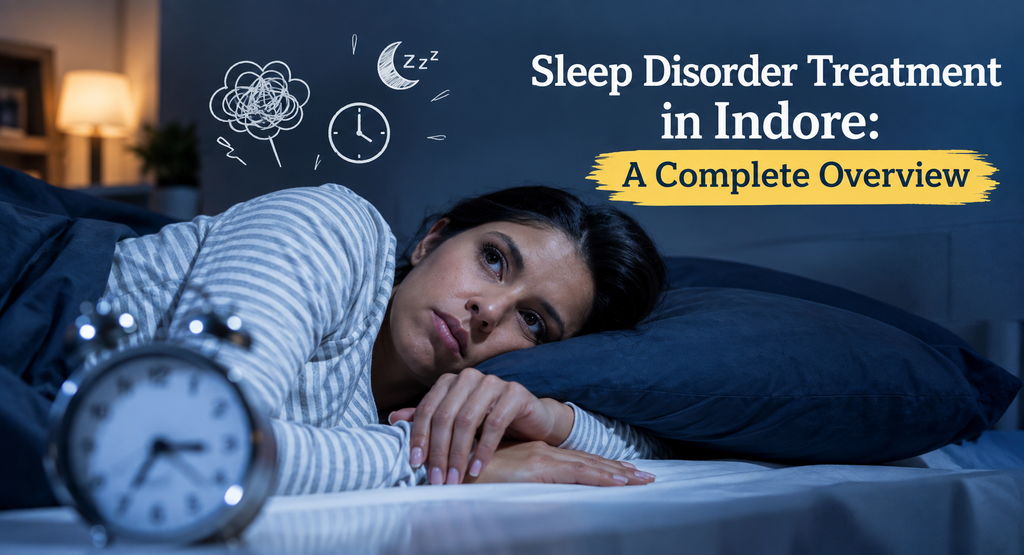
Good sleep is not just about feeling fresh in the morning. Sleep gives your body and mind time to rest, recover, and prepare for the next day. When sleep is disturbed regularly, it can affect your mood, concentration, energy, work, studies, and relationships.
Many people have an occasional sleepless night. That is usually not a major concern. But when difficulty sleeping becomes a regular problem, it may be a sign of a sleep disorder or another health concern.
If you are struggling with sleep for weeks or months, speaking with the Best Psychiatrist In Indore can help you understand what may be causing the problem and what kind of treatment may be suitable for you.
What Is a Sleep Disorder?
A sleep disorder is a condition that affects your normal sleep pattern. It may make it difficult to fall asleep, stay asleep, wake up at the right time, or feel rested after sleeping.
Some people spend hours in bed but cannot fall asleep. Others fall asleep easily but wake up several times during the night. Some may wake up very early and find it difficult to sleep again.
Sleep problems can also happen in the opposite way. A person may feel excessively sleepy during the day or suddenly fall asleep at inappropriate times.
These problems should not always be treated as a simple lack of discipline. Sleep can be affected by stress, anxiety, depression, medicines, physical health conditions, work schedules, lifestyle habits, and other sleep disorders.
Common Types of Sleep Problems
Sleep disorders can look different from person to person. Some common problems include insomnia, sleep apnoea, restless legs syndrome, narcolepsy, and problems related to the body’s sleep-wake schedule.
Insomnia is one of the most common concerns. A person may have difficulty falling asleep, wake repeatedly during the night, or wake too early and be unable to go back to sleep. Long-term insomnia can also lead to daytime tiredness, irritability, and difficulty concentrating.
Sleep apnoea is another condition that should not be ignored. It can involve loud snoring, pauses in breathing, choking or gasping during sleep, and excessive tiredness during the day.
The important thing is to understand why the sleep problem is happening instead of simply trying to force yourself to sleep.

What Causes Sleep Disorders?
There is rarely one reason behind every sleep problem.
Sometimes the reason is obvious. You may be under pressure at work, preparing for exams, dealing with relationship problems, or going through a difficult period in life. Stress and anxiety can make the mind stay active even when the body is tired.
Other times, the cause may be less obvious.
Common factors that can affect sleep include:
- Stress, anxiety, depression, and emotional difficulties
- Irregular sleep and wake timings
- Excessive phone or screen use before bed
- Caffeine or nicotine, particularly later in the day
- Alcohol or substance use
- Shift work or frequent changes in routine
- Certain medicines or physical health conditions
- Chronic pain or discomfort
- Snoring and breathing problems during sleep
- An uncomfortable or unsuitable sleep environment
This is why taking sleeping medicine on your own may not solve the actual problem. The underlying cause needs to be understood first.
How Does Poor Sleep Affect Mental Health?
Sleep and mental health are closely connected.
When you do not sleep well, you may notice that you become more irritated, emotionally sensitive, forgetful, or unable to concentrate. Even simple daily tasks can start feeling harder.
For someone already dealing with anxiety or low mood, poor sleep can make things feel even more difficult. At the same time, ongoing anxiety, depression, or stress can make it harder to sleep.
This can become a frustrating cycle: you cannot sleep because your mind is active, and the lack of sleep then makes your mind feel even more tired and overwhelmed.
A Best Psychiatrist In Indore can assess whether your sleep problem may be connected with anxiety, depression, stress, medication, or another mental health concern.
When Should You Seek Sleep Disorder Treatment?
You do not need to wait until your sleep problem becomes severe.
If you occasionally sleep late because of a busy day, travel, celebrations, or temporary stress, it may settle once your routine returns to normal.
But professional advice may be helpful when sleep problems keep happening and begin affecting your everyday life.
You should consider speaking with a professional if you regularly have difficulty falling asleep, keep waking during the night, wake too early, feel exhausted during the day, or struggle to concentrate because of poor sleep.
It is also important to seek medical advice if you snore loudly, wake up gasping or choking, or someone notices that your breathing stops during sleep.
The Best Psychiatrist In Indore can help assess the mental-health side of sleep problems and guide you toward appropriate care when needed.
What Happens During Sleep Disorder Treatment?
Treatment depends on the reason behind the sleep problem.
The first step is usually understanding your sleep pattern and looking at factors that may be affecting it. Your doctor may ask about your bedtime, waking time, daytime tiredness, stress, mood, medicines, lifestyle, and other symptoms.
For some people, improving sleep habits may be enough. For others, counselling or structured therapy may be recommended.
Cognitive behavioural therapy for insomnia, commonly called CBT-I, is an evidence-based approach used to address thoughts and behaviours that keep insomnia going.
Medication may sometimes be considered, depending on the person’s condition. It should be taken only under appropriate medical guidance because some sleeping medicines can cause side effects or dependence.
Simple Habits That Can Improve Sleep
Small changes in your daily routine can make a real difference.
Try to keep your sleep and wake-up times reasonably consistent, even on weekends. Give yourself some quiet time before bed instead of going directly from work, studying, or scrolling on your phone to trying to sleep.
Keep your bedroom comfortable, quiet, and dark. Avoid caffeine late in the day and try not to use your phone immediately before bedtime. Regular daytime physical activity can also support better sleep.
Most importantly, do not become overly worried about one bad night. Worrying continuously about whether you will sleep can itself make relaxation harder.
Why Professional Help Can Make a Difference
Many people with sleep problems keep trying different home remedies without understanding what is actually causing their symptoms.
One person may have insomnia because of anxiety. Another may have a disrupted sleep schedule because of work. Someone else may have a breathing-related sleep disorder.
The treatment cannot be exactly the same for everyone.
Consulting the Best Psychiatrist In Indore can be useful when sleep problems are connected with stress, anxiety, depression, mood changes, or other psychological concerns. A proper assessment helps identify the problem instead of treating only the symptom.

Do Not Ignore Long-Term Sleep Problems
Sleep problems are easy to dismiss.
You may tell yourself that you are simply busy, that your phone is keeping you awake, or that you will catch up on sleep later. But when poor sleep continues for a long time, it can start affecting how you function during the day.
You deserve to understand what is happening rather than simply accepting poor sleep as part of your routine.
If your sleep has been disturbed regularly, consider speaking with the Best Psychiatrist In Indore or another qualified healthcare professional who can assess your symptoms and guide you appropriately.
Conclusion
Sleep is a basic part of good mental and physical health. An occasional bad night is normal, but regular sleep difficulties should not be ignored.
Whether you are struggling to fall asleep, waking repeatedly, feeling tired throughout the day, or dealing with a mind that refuses to slow down at night, understanding the cause is the first step.
The Best Psychiatrist In Indore can help assess sleep problems when they are related to stress, anxiety, depression, mood, or other mental health concerns and guide you toward appropriate treatment.
Better sleep is not about forcing yourself to sleep. It is about understanding what is getting in the way and addressing it properly.
Frequently Asked Questions
1. What is the most common sleep disorder?
Insomnia is one of the most common sleep problems. It involves difficulty falling asleep, staying asleep, or waking too early and being unable to return to sleep.
2. Can anxiety cause sleep problems?
Yes. Stress and anxiety can make it difficult to relax at night and may contribute to ongoing sleep difficulties.
3. When should I see the Best Psychiatrist In Indore for sleep problems?
Consider professional help when sleep difficulties happen regularly, continue for weeks or months, or begin affecting your mood, concentration, work, studies, or daily life.
4. Can sleep disorders be treated without sleeping pills?
In many cases, treatment may include better sleep habits and behavioural or psychological approaches such as CBT-I. Medication is not suitable or necessary for everyone.
5. Is snoring always a normal sleep problem?
Not always. Loud snoring combined with pauses in breathing, gasping, choking, or significant daytime tiredness can be signs of sleep apnoea and should be medically assessed.