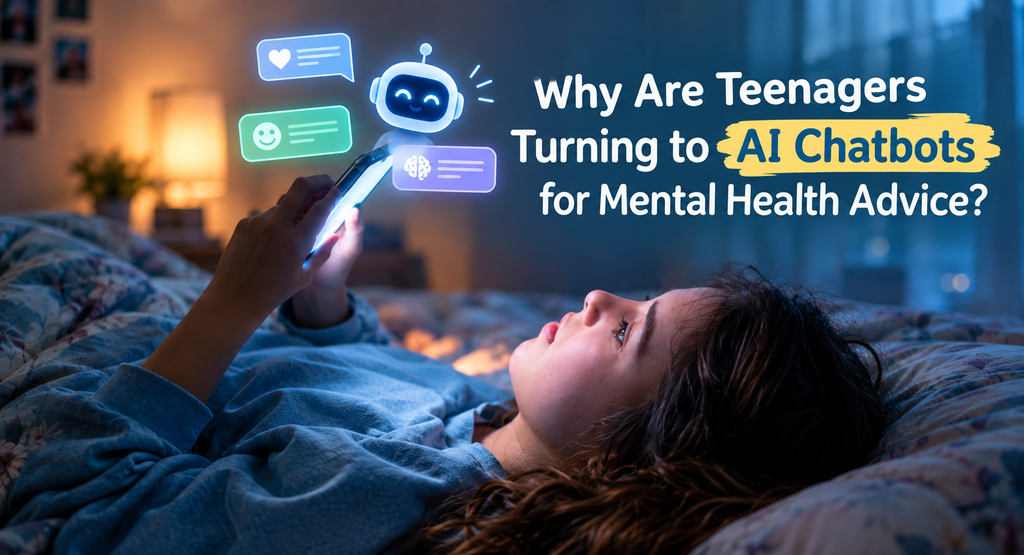
Imagine a teenager lying awake at night, feeling overwhelmed by exam pressure, friendship problems, future worries, or emotions they simply cannot explain. Instead of talking to a parent, teacher, or mental health professional, they may quietly turn to an AI chatbot for answers and reassurance.
As technology becomes a regular part of everyday life, many young people are using AI to explore their thoughts and feelings. While AI can provide general information, it cannot replace a proper mental health assessment or understand a teenager’s situation as deeply as a mental health professional can.
If emotional concerns continue or start affecting sleep, studies, relationships, behaviour, or daily life, consulting the Best Psychiatrist In Indore can help teenagers and their families understand the underlying concerns and choose appropriate support.
Why Do Teenagers Prefer AI Chatbots?
There is no single reason. Every teenager is different, but several factors can make AI chatbots attractive.
1. They Get an Immediate Response
Teenagers are used to getting information instantly. When they have a question, they often expect an answer within seconds.
An AI chatbot can respond immediately, while getting an appointment with a mental health professional may take more time.
For a teenager who is awake at night and struggling with thoughts, this instant response can feel comforting.
2. Talking to AI May Feel Less Embarrassing
Talking about mental health can be difficult, particularly for teenagers who are worried about being judged.
They may hesitate to tell their parents:
- “I feel anxious all the time.”
- “I don’t feel happy anymore.”
- “I hate going to school.”
- “I keep thinking about the same thing.”
- “I don’t know what is happening to me.”
Typing these thoughts into a chatbot may feel easier than saying them aloud.
3. Fear of Being Judged
Teenagers can be extremely sensitive to how others perceive them.
They may worry that friends will make fun of them or that parents will become angry or overly concerned.
An AI chatbot can seem emotionally neutral, which may encourage teenagers to ask questions they are uncomfortable discussing with people.
4. Curiosity About Their Own Feelings
Sometimes teenagers are not necessarily looking for treatment. They simply want to understand themselves.
They may search questions such as:
“Why do I overthink?”
“Why am I always angry?”
“Why can’t I concentrate?”
“Why do I feel lonely even around people?”
An AI chatbot can provide general information that helps them put their feelings into words.

Is Using AI for Mental Health Always a Bad Thing?
Not necessarily.
AI can be useful for general mental health education. It may help teenagers learn about topics such as stress, sleep, emotions, study pressure, communication, and healthy coping habits.
The concern begins when a teenager starts depending on AI as their main source of mental health support, particularly when they are experiencing persistent or serious symptoms.
AI does not have the same role as a psychiatrist or psychologist. It cannot conduct a complete clinical assessment, observe changes in behaviour over time, or understand the teenager’s complete personal and family context.
This is why parents should focus on safe and responsible use, rather than simply banning technology.
What Are the Risks of Depending Too Much on AI?
One of the biggest concerns is that teenagers may assume that an AI response is the same as a professional mental health assessment.
A chatbot may provide general information, but a person’s symptoms can have many possible causes. Stress, sleep problems, physical health conditions, family difficulties, academic pressure, anxiety, depression, and other concerns can sometimes overlap.
Another concern is that teenagers may keep asking AI the same questions instead of speaking to someone who can actually help them.
For example, a teenager experiencing significant anxiety may repeatedly ask an AI chatbot, “Do I have anxiety?” Instead of seeking professional assessment, they may continue searching for reassurance.
This can delay appropriate support.
What Should Parents Do?
Parents do not necessarily need to panic if they discover that their teenager is using AI to discuss emotions.
Instead, it can become an opportunity to start a conversation.
Try asking:
“What were you looking for?”
rather than:
“Why are you talking to an AI about your problems?”
A calm conversation can help parents understand what the teenager is experiencing.
Parents can also encourage teenagers to:
- Use AI mainly for general information and learning.
- Check important mental health information with a qualified professional.
- Talk to a trusted adult when something feels overwhelming.
- Avoid sharing highly sensitive personal information with online tools.
- Seek professional help when symptoms persist or interfere with everyday life.

When Should a Teenager See a Mental Health Professional?
Occasional stress, sadness, anger, or worry is part of growing up. However, parents should pay attention when noticeable changes continue or begin affecting everyday functioning.
Professional support may be appropriate when a teenager has persistent:
- Anxiety or excessive worry
- Low mood or loss of interest
- Sleep difficulties
- Anger or irritability
- Social withdrawal
- Problems with concentration
- Sudden changes in behaviour
- Academic or functioning difficulties
- Changes in eating habits
- Feelings of hopelessness or emotional distress
In such situations, consulting the Best Psychiatrist In Indore can help families understand what may be happening and whether professional treatment is needed.
AI Can Start a Conversation, But It Shouldn’t End There
Perhaps the most important thing parents can remember is that teenagers often use technology because it feels accessible.
Instead of seeing AI as the enemy, parents can use this trend as a reason to ask their children what they are going through.
A teenager who searches for mental health advice may simply be curious. But sometimes, that search can also be a quiet sign that they are struggling and don’t know how to ask for help.
The Best Psychiatrist In Indore can provide a proper evaluation and help teenagers and families understand their concerns in a safe and confidential setting.
The goal is not to replace technology with fear. The goal is to make sure technology does not replace genuine human connection and appropriate professional care.
A Balanced Approach to Teen Mental Health
AI is likely to become an increasingly common part of teenagers’ lives. Mental health conversations will be part of that change too.
The answer is not necessarily to prevent teenagers from asking questions online. Instead, they should learn the difference between general information and professional mental health care.
Parents can create an environment where teenagers feel comfortable saying, “I’m not okay,” without immediately fearing criticism or punishment.
And when emotional or behavioural changes become persistent, seeking help from the Best Psychiatrist In Indore can be an important step toward understanding the situation and supporting the teenager.
Mental health support works best when teenagers do not feel alone in dealing with their problems.
Frequently Asked Questions
1. Why are teenagers using AI chatbots for mental health advice?
Teenagers may use AI because it is easily accessible, provides quick responses, and can feel less embarrassing or intimidating than speaking to someone directly.
2. Can AI chatbots replace a psychiatrist?
No. AI can provide general information, but it cannot replace a professional mental health assessment. A Best Psychiatrist In Indore can evaluate symptoms, personal circumstances, and overall functioning before suggesting appropriate care.
3. Should parents stop their teenagers from using AI chatbots?
A complete ban may not always be the most helpful approach. Parents can instead discuss responsible use, privacy, and the importance of talking to trusted adults or mental health professionals when needed.
4. When should a teenager see a psychiatrist?
If anxiety, low mood, anger, sleep problems, withdrawal, concentration difficulties, or behavioural changes persist or interfere with school, relationships, or daily life, professional guidance may be useful.
5. Is asking AI about mental health itself a warning sign?
Not necessarily. Many teenagers use AI simply because they are curious. However, if a teenager is repeatedly seeking help from AI for serious emotional problems or appears increasingly distressed, it may be a good time to start a supportive conversation and consider professional help from the Best Psychiatrist In Indore.